
The wolf goddess San stands atop a cliff, her face streaked with blood and fury, while ancient spirits writhe in the forest below. This wasn't the cartoon I expected when my college roommate dragged me to watch Princess Mononoke in 1999. I'd rolled my eyes at another "kids' movie night," but within minutes, I was witnessing something that would fundamentally shift how I understood what animation could accomplish.
Here's the thing about animated films: we've been conditioned to see them as lesser. Somehow, the medium that gives creators infinite visual possibilities gets dismissed as juvenile entertainment. But the films that have stayed with me longest, the ones that resurface in my thoughts during quiet moments, happen to be animated. They've taught me that when you remove the constraints of physical reality, you don't escape truth—you dive deeper into it.
Princess Mononoke: War Has No Heroes
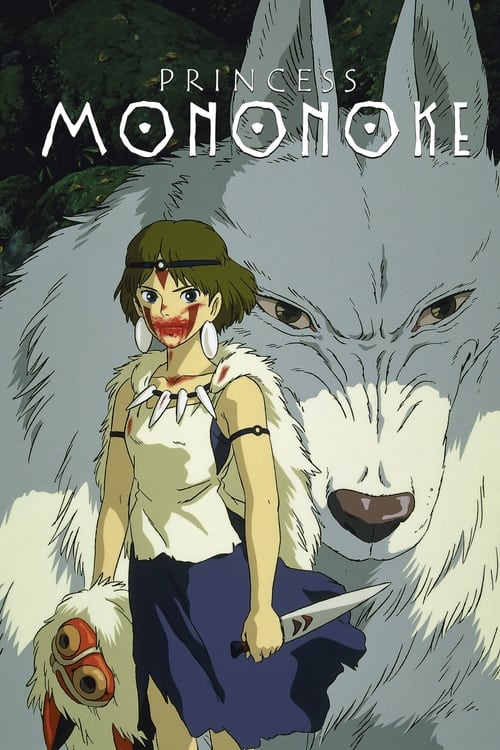
Hayao Miyazaki's 1997 masterwork remains the most complex meditation on environmentalism and industrialization I've ever encountered. Ashitaka's curse—a writhing, demonic mark that grants him terrible strength while slowly killing him—serves as the perfect metaphor for humanity's relationship with nature. We gain power through destruction, but that destruction inevitably consumes us.
What struck me most wasn't the breathtaking animation, though watching those kodama spirits rattle their heads in the moonlight still gives me chills. It was Miyazaki's refusal to provide easy answers. Lady Eboshi isn't a cartoon villain; she's building a community for outcasts and sex workers, genuinely caring for people society has abandoned. San isn't a noble savage; she's a traumatized young woman whose hatred threatens to destroy her. Ashitaka desperately seeks peace between them, but some wounds run too deep for simple reconciliation.
I think about Iron Town often these days, as we grapple with climate change and economic inequality. Miyazaki understood something most filmmakers miss: environmental destruction isn't caused by mustache-twirling villains, but by ordinary people making understandable choices. That's what makes it so terrifying. The film's climax, where the Forest Spirit's death and resurrection literally transforms the landscape, feels both mythic and urgently contemporary. Animation allowed Miyazaki to visualize the invisible—to show us the soul of the forest, the weight of curses, the terrible beauty of spirits dying.
Clocking in at 134 minutes, this isn't a film that talks down to anyone. It trusts viewers to sit with moral ambiguity, to feel the weight of choices that have no perfect outcomes.
Soul: The Quiet Devastation of Dreams Deferred

Pixar's 2020 exploration of purpose and passion hit me like a punch to the gut. Joe Gardner, voiced with weary determination by Jamie Foxx, embodies every creative person who's ever felt their dreams slipping away. He's 46, teaching middle school band, watching younger musicians get the opportunities he's spent decades chasing.
Honestly, I wasn't prepared for how personal this would feel. That opening sequence, where Joe finally gets his shot at the jazz club only to fall down a manhole, perfectly captures the cruel randomness that can derail a life's work. Directors Pete Docter, Kemp Powers, and Kevan Curran created something that functions simultaneously as metaphysical adventure and intimate character study.
The film's controversial opinion—and I'm here for it—is that passion isn't everything. Soul 22, brilliantly voiced by Tina Fey, has spent centuries rejecting life because she can't find her "spark." But the revelation isn't that she needs a grand passion; it's that living itself is enough. Watching Joe realize that his obsession with jazz has blinded him to everything else—his student's breakthrough moment, the taste of pizza, genuine human connection—devastated me more than any action sequence ever could.
The animation seamlessly blends photorealistic New York streets with the ethereal Great Before, but it's the emotional realism that lingers. That barbershop scene, where Joe reconnects with his community while in 22's body, captures something profound about how we overlook daily miracles while chasing extraordinary ones.
Foxx and Fey deliver performances that feel lived-in rather than performed. When Joe finally plays that perfect set and feels... empty, it's a moment that could only work in animation. The medium's heightened reality makes the emotional truth hit harder.
The Incredibles: Superhero Movie as Family Therapy
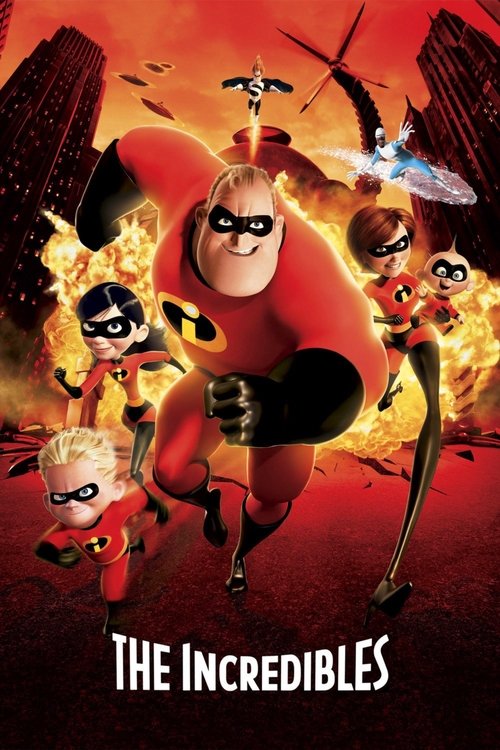
Brad Bird's 2004 film disguised a sophisticated examination of midlife crisis, family dysfunction, and identity as a superhero adventure. Bob Parr isn't just a former hero forced into hiding; he's every middle-aged person who feels invisible, irrelevant, diminished by routine.
The dinner table arguments between Bob and Helen feel ripped from real marriages. When Bob starts sneaking off to Syndrome's island, it's essentially an affair—he's seeking excitement and validation outside his family. Helen's detective work, discovering Bob's lies through his changed behavior, carries real emotional weight. These aren't cartoon conflicts; they're the tensions that actually break relationships.
Syndrome himself represents something uniquely modern: the entitled fan turned destroyer. His backstory—a kid obsessed with Mr. Incredible who becomes his greatest enemy after feeling rejected—predated our current conversations about toxic fandom by years. "When everyone's super, no one will be," he declares, articulating a philosophy that's both democratically appealing and deeply nihilistic.
Bird's direction balances spectacular action with intimate moments. That scene where Violet creates a force field to protect her family, finally embracing her powers, works as both superhero spectacle and coming-of-age triumph. Dash discovering he can run on water captures pure joy in a way live-action couldn't match.
The film's treatment of superhero retirement, of powers as metaphor for human potential, influenced everything from Watchmen to the MCU. But it's the family dynamics that make it endure.
---
These films taught me that animation isn't a genre—it's a medium capable of exploring any subject with depth and sophistication. They've made me more selective about what I watch, more appreciative of storytelling that respects its audience's intelligence.
If you're looking to explore more films that challenge expectations about what animation can achieve, check out CinemaSearch. Their recommendation engine helped me discover several animated gems I'd overlooked, and their filters make it easy to find films that match your mood, whether you're seeking philosophical depth or pure visual wonder.