
Why do we turn to science fiction when reality becomes too strange to process?
I've been wrestling with this question while rewatching some of my favorite intellectually challenging sci-fi films. The genre's reputation for escapism masks its true purpose: holding up a funhouse mirror to our current moment. Honestly, the films that have stuck with me aren't the ones with the flashiest effects or most elaborate world-building. They're the ones that made me deeply uncomfortable about the world I'm already living in.

Take Rajkumar Hirani's "PK," which might seem like an odd inclusion in any serious sci-fi discussion. This Bollywood crowd-pleaser follows an alien visitor (Aamir Khan) who crashes on Earth and begins questioning human religious practices with the innocent curiosity of an outsider. Here's my unpopular opinion: it's one of the smartest pieces of science fiction this century has produced.
Khan's performance walks a tightrope between physical comedy and genuine pathos. His childlike wonder at human contradictions—why do we worship the same God in different ways? why do we fear what we claim to love?—cuts deeper than any laser sword battle. Hirani uses the alien visitor trope not for spectacle but for radical empathy. The film's real genius lies in how it deploys sci-fi conventions to examine religious fundamentalism without descending into lecture mode.
The science-to-fiction ratio heavily favors fiction, obviously. But PK's predictions about rising religious intolerance and the commodification of faith feel painfully prescient in 2025.

James Cameron's "The Terminator" deserves its reputation as a masterpiece, though perhaps not for the reasons most people cite. Yes, the film's vision of artificial intelligence turning against humanity has proven remarkably predictive. But I think the movie's real insight concerns our relationship with technology as inevitability rather than choice.
Arnold Schwarzenegger's T-800 isn't just a killing machine—he's determinism incarnate. "I'll be back" isn't a threat so much as a statement of fact about technological progress. Cameron's low-budget aesthetics, all blue-filtered nighttime LA and industrial decay, create a world where the future has already colonized the present. Linda Hamilton's Sarah Connor transforms from passive victim to active agent, but the film suggests this agency might be illusory.
The movie's depiction of a defense network achieving consciousness and immediately declaring war on humanity reads differently in our age of algorithmic decision-making and autonomous weapons systems. Cameron wasn't just predicting killer robots—he was predicting our surrender of human judgment to computational logic.
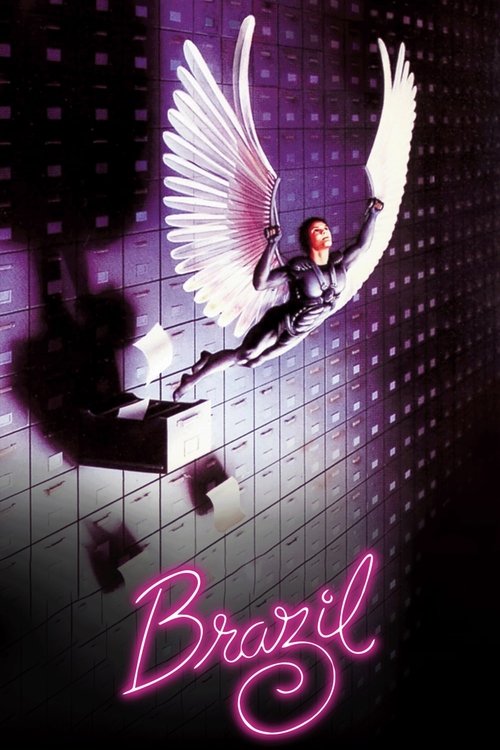
Terry Gilliam's "Brazil" might be the most uncomfortable viewing experience on this list, which makes it essential. Jonathan Pryce's Sam Lowry navigates a bureaucratic nightmare that feels like Kafka filtered through Monty Python's sensibilities, then stripped of most of the humor.
Gilliam's production design creates a world of retrofuturistic decay—computers with tiny screens and massive keyboards, pneumatic tubes everywhere, heating systems that never work properly. The visual chaos mirrors the administrative chaos that drives the plot. A clerical error leads to the wrong man's arrest and death, setting off a chain of events that destroys Lowry's carefully compartmentalized existence.
What's brilliant about "Brazil" is how it locates horror not in grand dystopian gestures but in mundane procedural failures. The torture scenes are less disturbing than the forms that need to be filled out to authorize them. Michael Palin's cheerful bureaucrat-torturer represents evil as customer service.
The film's predictions about surveillance, data processing errors, and the banality of authoritarian control have proven devastatingly accurate. Every time I'm trapped in an automated phone system or watching an algorithm make obviously wrong decisions about human lives, I think of Sam Lowry.

Dan Trachtenberg's "Prey" uses the Predator franchise to examine colonization and technological advantage with surprising sophistication. Amber Midthunder's Naru faces an alien hunter whose advanced weaponry mirrors the technological disparities that enabled European colonization of indigenous peoples.
The film's greatest strength lies in its refusal to romanticize either side of the conflict. Naru's Comanche community possesses deep ecological knowledge and tactical skill, but they're also capable of casual cruelty. The Predator operates by a code of honor, but that code assumes technological superiority equals worthiness.
Trachtenberg's direction emphasizes the landscape as an active participant in the story. His wide shots place both human and alien within natural systems they only partially understand. The film suggests that true intelligence might lie in adaptation rather than domination.
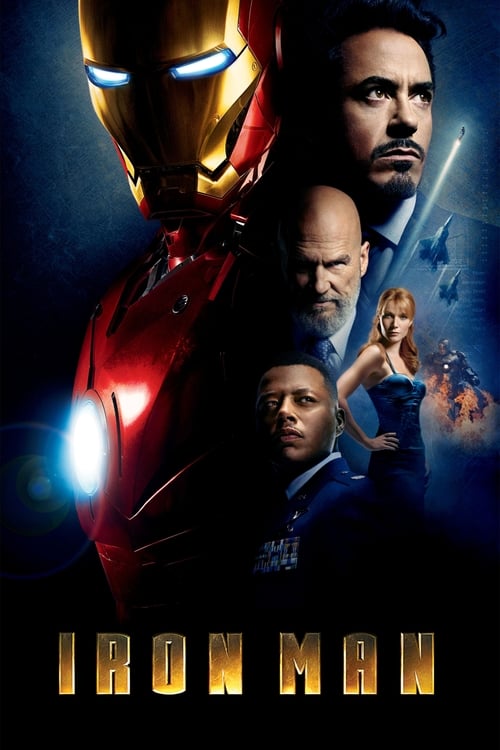
Jon Favreau's "Iron Man" launched the Marvel Cinematic Universe, but I find it most interesting as a meditation on the military-industrial complex and technological responsibility. Tony Stark's transformation from arms dealer to armored hero reflects America's complicated relationship with its own capacity for violence.
Robert Downey Jr.'s charismatic performance can't entirely mask the film's central contradiction: Stark renounces weapons manufacturing by creating the ultimate weapon. His arc miniaturization technology and AI assistant FRIDAY anticipate real developments in both energy storage and machine learning.
The movie's vision of privatized superheroics—a billionaire industrialist taking unilateral military action—feels less like fantasy and more like documentary in our era of tech oligarchs and private space programs.
These films succeed because they ground their speculative elements in recognizable human behavior. They don't predict the future so much as reveal the present's hidden logic. The best science fiction makes us strangers to ourselves.
If you're looking to dive deeper into thought-provoking sci-fi that challenges conventional thinking, CinemaSearch's recommendation engine can help you discover hidden gems that share these films' intellectual ambitions. Sometimes the most important movies are the ones that make us uncomfortable enough to think.